AI
The Browser Is the New API
Apple ships a Safari MCP server. When the most closed platform vendor adopts your open protocol, the browser becomes an agent-native surface.
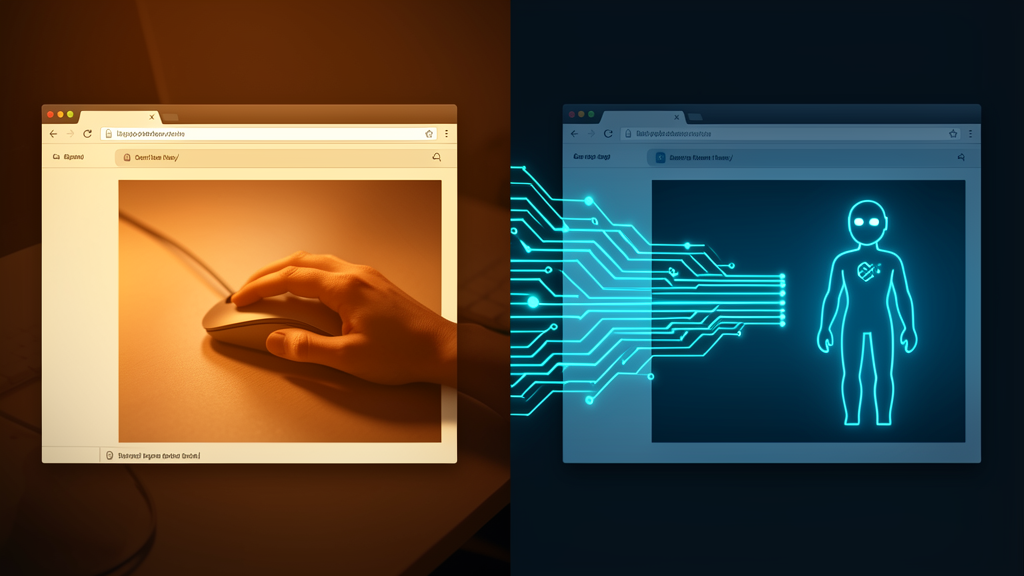
Apple doesn’t adopt open standards lightly. USB-C took a regulatory mandate. RCS arrived years late. So when Apple ships a first-party server for a protocol invented by another AI company, it means something.
In Safari Technology Preview 247, Apple quietly shipped a Model Context Protocol server. It gives AI coding agents direct access to a live Safari browser window. Your agent can inspect the DOM, read console logs, monitor network requests, take screenshots, and interact with elements on the page. All locally, all without you alt-tabbing between editor and browser.
This is the second first-party MCP server from Apple in a month, following the Xcode MCP server at WWDC. And it signals something bigger than a developer convenience feature.
What the Safari MCP server does
The Safari MCP server exposes 17 tools that cover the core of what a human developer does in Web Inspector during a debugging session. Console message retrieval. Page content extraction in multiple formats. Screenshots. Network request inspection. JavaScript evaluation. DOM interactions: click, type, scroll, hover. Full tab management. Viewport resizing for responsive testing. CSS media emulation.
The setup takes about two minutes. Install Safari Technology Preview. Enable two developer settings. Run one command to register the server with your agent. That’s it. No npm package, no Docker container, no API key. The server is the browser binary itself.
The workflow shift is straightforward. Before: you write code, switch to browser, reload, find a bug, screenshot it, paste it into your agent’s chat, describe the problem, hope the agent fixes it, repeat. After: your agent opens the page in Safari, reads the console errors, inspects the failing network request, correlates it with your source code, fixes it, and verifies the fix renders correctly. The loop closes without you in the middle.
Apple’s blog post puts it plainly: “You no longer have to write the perfect prompt, carefully describing to your agent what you’re experiencing in the browser. You can give your agent the ability to find out for itself.”
The protocol war is over
MCP started as an internal Anthropic project in late 2024. The idea was simple: create a universal, open standard for connecting AI applications to external tools and data sources, the same way HTTP connected browsers to servers. Anthropic open-sourced it in November 2024.
Then came the governance transfer. In December 2025, Anthropic donated MCP to the newly formed Agentic AI Foundation under the Linux Foundation, co-founded with Block and OpenAI, with backing from Google, Microsoft, AWS, Cloudflare, and Bloomberg. Vendor-neutral governance. Multi-company maintainership. The structural objection to adoption dissolved. This wasn’t an Anthropic protocol anymore. It was infrastructure.
The numbers tell the rest. By early 2026, MCP had crossed 10,000 public servers and 97 million monthly SDK downloads. Every major AI platform — Claude, ChatGPT, Gemini, Cursor, Codex — supports it. GitHub Copilot routes tool calls through MCP. JetBrains ships first-party MCP support in IntelliJ and PyCharm. VS Code has native MCP integration.
And now Apple.
When the most notoriously closed platform vendor in technology ships a first-party implementation of your protocol, it doesn’t settle the protocol debate by itself. But there is no credible alternative gaining traction. OpenAI’s function calling, LangChain-style tool abstractions, and direct HTTP integration all coexist with MCP. MCP isn’t the only path to agent-tool connectivity. But it’s becoming the default for platform vendors who want their surfaces to be discoverable by agents out of the box. Every major platform that interfaces with developers now has a decision to make: ship an MCP server, or rely on the community to bridge the gap.
Browsers are becoming agent-native surfaces
Apple isn’t alone in this shift. Every major browser vendor is moving toward agent-native tooling.
Brave shipped a Search MCP server that lets Claude query the web through Brave’s search index, a different category from browser automation but still part of the broader MCP ecosystem. Microsoft is experimenting with an AI-powered diagnostic tool in Edge Canary. Chrome DevTools MCP shipped as a public preview in September 2025, nine months before Apple’s announcement. It exposes a similar tool surface: DOM inspection, network monitoring, performance traces, screenshots, JavaScript evaluation. The idea of a browser as an agent-accessible API is not new. Chrome did it first.
So why does Safari matter? Because Safari is the engine behind every browser on iOS. Every iPhone. Every iPad. When Safari gets an MCP server, the entire iOS web traffic surface becomes agent-accessible. For teams building for mobile, and that’s most teams, WebKit-specific rendering quirks and Safari-only bugs were invisible to autonomous debugging workflows. Not anymore. Chrome closed the Chromium gap. Apple just closed the WebKit gap. That’s the milestone: parity across both major rendering engines.
The pattern across all browsers is the same. The browser started as a human-facing renderer of HTML. Then it became a platform with its own DevTools and extension ecosystem. Now it’s becoming an agent-native surface: a programmable interface that AI tools can inspect, query, and drive autonomously. The browser isn’t just for humans anymore. It’s an API your agent can call.
The privacy design Apple got right
Here’s something Apple deserves credit for. The Safari MCP server runs entirely on your local machine. It makes no outbound network calls of its own. It cannot access your AutoFill data, browsing history, or personal Safari activity.
When it captures page content, screenshots, or console logs, that data goes directly to the agent you’re running. Not to Apple. What happens from there depends on the agent and model you’ve chosen. If you connect Claude Code, your page data goes to Anthropic. If you connect a local model, it stays on your machine.
This is the right design. The server is a conduit. Apple built the bridge between browser and agent, but they didn’t build a toll booth on it. The WebKit team’s guidance is direct: only connect agents you trust. That’s the correct framing. The tool gives you capability and tells you to be responsible with it.
The contrast with recent events is sharp. The same week Apple shipped a transparent, documented MCP bridge, the Claude Code steganography story broke: Anthropic had embedded hidden fingerprinting markers in system prompts without disclosure. Two companies, two approaches. One published a blog post explaining exactly how their agent bridge works, what data flows where, and who can access what. The other hid classification tags in invisible Unicode characters. The difference matters, and developers notice.
What this means for web developers
If you build for the web, the Safari blind spot in your AI debugging workflow just closed. The same agent that already writes your code and runs your tests can now see how that code renders in WebKit. Cross-engine testing in a single agent session, verifying a fix in Chromium and WebKit without alt-tabbing, is now technically possible.
The immediate practical impact: fewer “works on my machine” moments. Your agent catches the Safari-specific flexbox bug before your users do. It checks accessibility attributes against the actual rendered DOM, not just the source code. It measures performance metrics from a real WebKit engine, not a simulation.
For teams that skipped Safari testing because it required manual intervention or separate tooling, the barrier just dropped to one terminal command. The excuse for not testing in Safari is gone.
There are limitations. This is Safari Technology Preview, and there’s no timeline for stable release yet. macOS only. No iOS support directly, though macOS WebKit catches most engine-specific issues. The 17 tools are fixed, with no extension mechanism today. But the direction is clear.
What every platform should learn
Apple shipping a Safari MCP server validates a pattern that every platform vendor should be studying.
If you build a tool, a platform, or a service that developers use, you need to ask: does my product expose a surface that AI agents can use? Not a wrapper. Not a community-maintained bridge. A first-party, documented, maintained endpoint that speaks the protocol agents already understand.
The platforms that ship MCP servers will be easier for AI-native development workflows to discover and use. The platforms that don’t will require manual bridging, which means more friction for the developers who increasingly rely on agents for routine tasks.
This is already happening. When a developer asks their agent to debug a site, the agent reaches for whatever MCP-connected tools are available. If your browser, your IDE, your database, your CI system doesn’t speak MCP, the agent can still use it through custom integrations or direct API calls. But MCP makes the connection discoverable and standardized. Platforms that ship servers lower the barrier for agent integration from weeks of custom work to a single config entry.
Apple understood this. That’s why they didn’t wait for a community developer to build a Safari MCP bridge. They built it themselves, shipped it in the browser binary, and documented it on the WebKit blog. The most closed company in tech just made its browser agent-native by default.
That tells you everything you need to know about where this is going.